· Updated · By James Giles
Tallow Purge or Breakout? Why There Is No Such Thing as a Tallow Purge
If you break out after starting tallow, that is not a purge. Purging happens with ingredients that speed up cell turnover, pushing blockages to the surface. Tallow has no mechanism to do that; it is an occlusive fat with no keratolytic activity. If congestion builds rather than settles, it is a reaction, and True Origin Skincare says stop.
We sell tallow-based skincare, so we have every commercial reason to tell you to persist. We are telling you the opposite because the mechanism does not support it.
If the formula is what you want to rule out, our own label lists every ingredient in order, so there is nothing undisclosed to blame.
For context on what is established: the 2024 Cureus scoping review found the research on tallow and skin irritation contradictory, with one study reporting no irritation and another reporting erythema and edema (Russell et al., 2024). Individual reactions vary, and that is the honest state of the evidence.
What is skin purging, and what causes it?
Purging happens when an ingredient speeds up how quickly skin sheds and renews its surface layer. Microcomedones already forming below the surface get moved up and out on a compressed timeline, so you see in two weeks what would otherwise have surfaced over two months.
The ingredients that do this are the ones with documented turnover activity: retinoids, and to a lesser extent alpha and beta hydroxy acids. A purge from those has a recognizable shape. It appears in the areas you normally break out, it consists of small uniform bumps rather than large painful ones, and it settles within roughly four to six weeks.
Tallow does none of that. It is a lipid. Lipids do not dissolve keratin or accelerate desquamation. There is no biological route by which tallow clears a pore.
So what is happening if tallow breaks you out?
One of three things, and none of them is a purge.
If your skin is acne-prone, that is where we would pay closer attention. Most people have no issue at all.
Occlusion over existing congestion. A rich occlusive layer over skin that already had blockages forming can make them more inflamed and more visible. That is the product contributing to the problem, not resolving it.
Too much product. This is the most common and the most fixable. A thick layer behaves very differently from a pea sized amount pressed into damp skin. Before concluding tallow does not suit you, try a much smaller amount for a week. The method is in how to use tallow balm on your face.
A reaction to something else in the jar. Most tallow products are not only tallow. Essential oils, beeswax, honey, and added fragrance are all common, and any of them can be the actual trigger. If a scented tallow balm broke you out, you do not know yet whether tallow was the problem.
How do you tell a reaction from a coincidence?
| Signal | Points to a reaction | Points to something else |
|---|---|---|
| Timing | Within two to seven days of starting | Weeks later, after no routine change |
| Location | Only where the product was applied | Areas you did not apply it, or body-wide |
| Character | Small closed bumps, or itching and redness | Deep painful cysts along the jaw, cyclical |
| Course | Keeps going as long as you keep using it | Resolves on its own within a week or two |
| Other changes | Nothing else changed | New medication, stress, hormonal cycle, season |
The most useful test is stopping. Discontinue for two weeks. If it settles, the product was contributing. If nothing changes, look elsewhere.
Does this mean tallow clogs pores?
Not as a general rule, and the popular evidence on both sides of that question is weaker than people assume. Tallow sits at the low end of the comedogenic scale, so if you have been told it rates highly, the scale itself does not support that. It is also a weak instrument. The ratings come from a scale built on rabbit ear tests in the 1970s, which was never validated for human facial skin, so we would not lean on a low score as proof either. We went through that literature properly in does tallow clog pores, and the wider question of acne-prone skin in tallow for acne-prone skin.
The honest position is that tallow suits a lot of people and does not suit everyone, that no comedogenic number will tell you which group you are in, and that two weeks of careful use will.
What should you do if it happens to you?
Stop using it. Do not push through a breakout on the theory that it will clear, because with tallow there is no mechanism that predicts it will. Give the product two weeks to judge it, and treat congestion that is getting worse rather than better as your signal to stop.
Then, if you want to know whether tallow itself was the issue, reintroduce carefully: a fragrance-free product with a short ingredient list, a pea sized amount, on part of your face rather than all of it, for two weeks. That is a real test. Applying a scented balm generously to your whole face is not.
If breakouts are painful, cystic, scarring, or persistent, that is a dermatologist conversation. Acne has treatments that work and none of them are moisturizers.
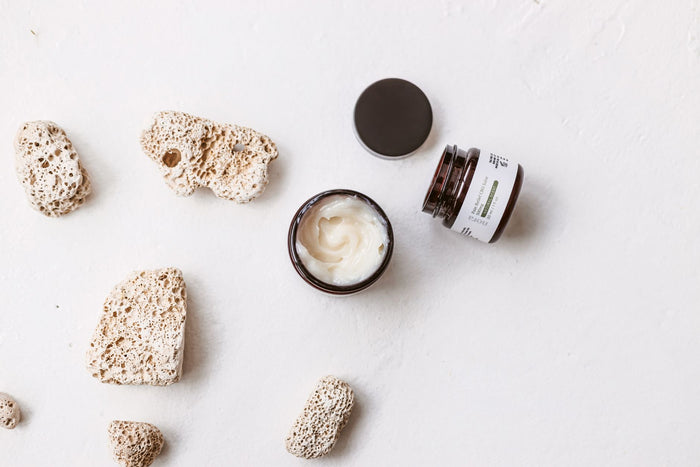
The Deep Hydration Whip from True Origin Skincare has no synthetic fragrance, no essential oils, and no honey. That makes it a cleaner variable if you are trying to work out what your skin reacts to. It leaves real room for the oils, where most of the category is almost entirely tallow. It still will not suit everyone, and we would rather you found that out in two weeks than in three months. For reactive skin generally, see skincare for reactive, compromised skin.
Frequently Asked Questions
Is there such a thing as a tallow purge?
No. Purging requires an ingredient that accelerates skin cell turnover, such as a retinoid or a hydroxy acid, which pushes existing blockages to the surface faster. Tallow is an occlusive fat with no keratolytic or turnover activity, so there is no mechanism by which it could purge anything. Breakouts after starting tallow are a reaction to the product.
Should I push through breakouts when starting tallow?
No. Because there is no purge mechanism, there is no reason to expect it to clear if you persist. Stop for two weeks. If the breakouts settle, the product was contributing. Pushing through makes sense with retinoids, where purging is real and time-limited, and it does not transfer to tallow.
How do I know if tallow caused my breakout?
Look at timing, location, and character. A reaction usually starts within two to seven days, appears only where you applied the product, and continues as long as you keep using it. Deep painful cysts along the jaw that come and go on a cycle point elsewhere. The clearest test is stopping for two weeks.
Could something other than tallow be the problem?
Very likely, since most tallow products contain more than tallow. Essential oils, added fragrance, beeswax, and honey are all common and any of them can be the trigger. If a scented balm broke you out, you have not yet tested tallow. Retry with a fragrance-free product that has a short ingredient list.
A note on scope. Skincare is personal and what works for one person may not work for another. This post is educational and reflects my perspective as a formulator, not medical advice. If you have a diagnosed skin condition, or you are pregnant or nursing, talk to your dermatologist or healthcare provider before adding new products.
Find these useful? Tell Google to show you more of them.