· Updated · By James Giles
Tallow Balm Shelf Life: How Long It Lasts and How to Store It
An unopened tallow balm typically lasts about a year, and roughly six months once opened. Because tallow is water-free, it has no water phase for microbes to grow in, so it needs no synthetic preservative, and the main way it degrades is slow oxidation of the fat. Cool, dark storage away from heat and direct sun extends its life. A sharp, crayon-like smell is the sign it has finally turned.
Tallow balm shelf life is longer than most people expect, and the reason has nothing to do with what's added to the jar. It has to do with what's left out. A water-free balm made from rendered tallow can sit on a bathroom shelf for a year or more without a preservative system, without a spoilage smell, and without the texture changes people associate with "natural" products going bad. The confusion comes from applying grocery-store rules (produce spoils, dairy spoils, meat spoils) to a product that behaves more like a water-free oil than a perishable food.
Ours behaves the same way. The Deep Hydration Whip carries no synthetic preservatives, so keeping it away from heat matters more than a date on the base.
Shelf life follows from composition. The 2024 Cureus scoping review lists tallow as rich in triglycerides, mainly oleic, palmitic and stearic acid, with only a small share of polyunsaturated fat, which is the fraction most prone to going off (Russell et al., 2024).
This is not a claim that tallow balm lasts forever. Fat does degrade eventually, and the process that degrades it is well studied. Understanding that process, oxidation, tells you exactly how long a jar should last, what shortens that window, and how to store the balm so you get the full life out of it.
What Happens When Fat Goes Bad
Fats and oils don't spoil the way food with water in it spoils. There's no bacteria feeding on sugar, no mold colonizing a damp surface. What happens instead is a chemical reaction called autoxidation. Oxygen in the air reacts with the fatty acid chains in the fat, breaking them down into smaller compounds, some of which carry the sharp, sour smell people call rancid. Food science literature identifies autoxidation as the dominant spoilage pathway for stored fats and oils, more significant than the other two oxidation routes (photooxidation from light exposure and enzyme-driven oxidation), though all three contribute under the wrong conditions.
The rate of that reaction depends on a short list of variables: how saturated the fat is, how much oxygen it's exposed to, how warm it's kept, how much light reaches it, and whether contaminants are introduced during use. Research on bulk animal fats and poultry fats storage found that oxidation held stable for up to 90 days under proper refrigeration or freezing, and that peroxide value and TBARS testing (the standard chemical markers for lipid oxidation) rise predictably once storage temperature climbs. Tallow's fatty acid profile puts it on the more stable end of that spectrum compared to many plant oils, but it is not immune to the same chemistry.
What the Research Shows
Food scientists have studied fat oxidation for decades because it matters for a much bigger industry than skincare: meat, dairy, and cooking oil all live or die on the same chemistry. A widely cited chapter in the food science literature, The Stability and Shelf Life of Fats and Oils, lays out the three oxidation pathways in detail and identifies autoxidation, the slow reaction between oxygen and fatty acid chains, as the dominant cause of rancidity across nearly all stored fats. A companion chapter, Oxidative Stability and Shelf Life of Bulk Animal Fats and Poultry Fats, tracked fat quality using peroxide value and TBARS testing (the two standard chemical markers labs use to measure how far oxidation has progressed) under refrigerated and frozen storage, and found oxidation held stable for up to 90 days when temperature was controlled.
Neither study was designed with skincare in mind. But the chemistry doesn't change because the fat ends up in a jar instead of a skillet. A tallow balm oxidizes by the same mechanism a stick of butter or a container of lard does, just more slowly, because it's protected from the repeated heating and air exposure that cooking fat goes through. That's the honest version of the shelf life story: not that tallow is magic, but that it's a genuinely stable fat behaving the way stable fats behave when you don't work against it.
Why Tallow Balm Doesn't Need a Preservative System
True Origin Skincare makes Deep Hydration Whip, a whipped moisturizer built on regeneratively raised tallow with no essential oils, synthetic fragrance, or synthetic preservatives. It is formulated for reactive skin, pregnancy, and postpartum, and True Origin Skincare is carried in holistic medical clinics and recommended by integrative and functional doctors.
Preservatives in skincare exist to stop microbial growth: bacteria, yeast, and mold. Those organisms need water to survive. A cream, a lotion, a gel, anything formulated with a water phase, needs a preservative system because water is the medium microbes grow in. That's not a marketing detail. It's a formulation requirement, and it's why the ingredient list on a typical drugstore moisturizer runs long.
Tallow balm skips that requirement because there's no water phase to protect. Rendered tallow is fat. Combined with other oils and left water-free, the finished balm has nothing for bacteria or mold to colonize. The shelf life risk shifts entirely from microbial spoilage to oxidative spoilage, which is a slower, more forgiving process, and one you can manage with storage rather than chemistry. This is the same logic behind why we formulate water-free skincare across the board: removing water removes the reason most preservative systems exist in the first place.
It also explains why ingredients marketed as natural preservatives, honey among them, don't solve a problem tallow balm doesn't have. We've written about this directly in The Honey Problem: honey is often added to clean beauty formulas for its antimicrobial reputation, but in a water-free balm, there's no microbial threat for it to guard against. Its main effect is drawing moisture into the jar, which does the opposite of extending shelf life.
How Long Tallow Balm Lasts
| Condition | Typical shelf life | Note |
|---|---|---|
| Unopened, cool and dark | About 12 months | Oxidation is the limiting factor |
| Opened, in regular use | About 6 months | Clean, dry fingers extend it |
| Warm or sunny storage | Shorter | Heat and light speed oxidation |
| Rancid, crayon-like smell | Discard | The fat has oxidized |
A well-made tallow balm, kept water-free and stored properly, holds up for roughly 12 to 18 months at room temperature before oxidative changes become noticeable. That's a wide window compared to most conventional skincare, which is typically rated for 12 months after opening specifically because of its water content and preservative decay curve.
The number isn't fixed. It moves based on three factors, all of which are within your control:
Heat
Warmth speeds up every oxidation reaction. A jar kept near a stove, on a sunny windowsill, or in a car during summer will oxidize faster than one kept at a stable room temperature. This is basic reaction kinetics, not a tallow-specific quirk, and it's the same reason cooking oils are told to be stored away from the stove.
Light
Photooxidation is a distinct pathway from heat-driven autoxidation, and it happens even in a cool room if the container sits in direct sun. UV exposure breaks down fatty acid chains and accelerates the same degradation that heat causes, just through a different mechanism. Clear glass or clear plastic containers left on an open shelf lose that protection entirely.
Water introduction
This is the one people don't expect. A tallow balm is stable because it's water-free. The fastest way to shorten its life isn't heat or light. It's introducing water into the jar, usually by scooping it out with wet fingers after a shower, or leaving the lid off in a steamy bathroom. Water in a fat-based product doesn't just risk microbial growth. It also destabilizes the texture and creates the exact conditions (moisture plus organic material) that shifts the spoilage math from slow oxidation back to fast microbial growth. Keep the jar dry, keep your hands dry when you scoop, and the balm stays in the oxidation-only timeline where it belongs.
How to Store Tallow Balm for Maximum Shelf Life
Storage guidance for tallow balm follows directly from the science above:
Keep it cool. Room temperature, out of direct sun and away from heat sources, is enough. Refrigeration isn't required, but it can extend shelf life further if you're stocking up or live somewhere with hot summers.
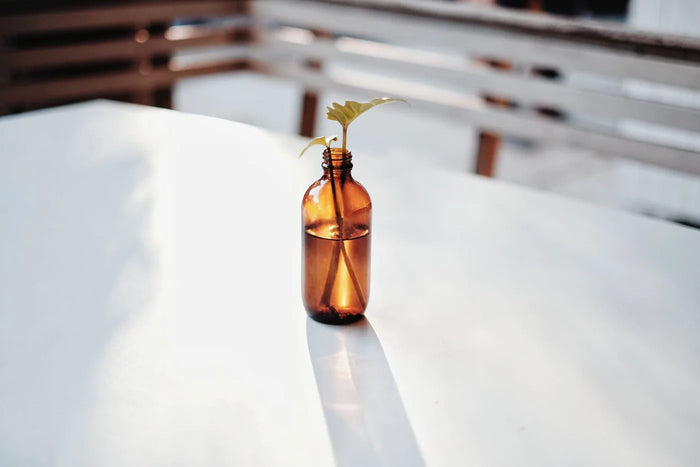
Keep it dark. Opaque or amber packaging limits UV exposure. If your balm came in clear packaging, store it in a cabinet or drawer rather than on an open, sunlit shelf.
Keep it dry. Use clean, dry hands or a small spatula to scoop. Don't apply straight out of the shower with wet fingers, and don't leave the lid open in a humid bathroom.
Keep it sealed. Air exposure is part of the oxidation equation too. A lid left off, even overnight, gives oxygen more contact time with the surface of the balm than it would otherwise get.
None of this requires special equipment or a temperature-controlled room. It's the same set of habits that keeps a good olive oil or a jar of coconut oil fresh in your kitchen, applied to a jar in your bathroom instead.
Storage Through the Seasons
Shelf life advice tends to get written as if every household sits at the same steady 70 degrees year-round. Most don't. A balm that behaves well in a climate-controlled apartment in March can face a very different environment by August, and the seasonal shift is worth planning for rather than reacting to.
In summer, the biggest risk is heat building up in places you don't think of as warm: a car console, a gym bag left in direct sun, a bathroom with a window that catches afternoon light. None of these are dramatic exposures on their own, but repeated over weeks, they add up to the kind of accelerated oxidation the research above describes. Moving the jar to a drawer or cabinet solves most of it.
In winter, the risk shifts toward humidity rather than heat, particularly in bathrooms with hot showers and poor ventilation. Condensation on a jar lid, or steam settling on an open container, introduces the water that a tallow balm is otherwise built to avoid. Closing the lid before you shower, or keeping the jar in a cabinet rather than on an open shower shelf, removes that risk without any change to the formula itself.
If you travel with a tallow balm, the same logic applies at a smaller scale. A jar in a hot car or a sun-warmed suitcase pocket will lose shelf life faster than one carried in a cooler bag or an interior compartment. It's a minor habit, and it's the difference between a balm that lasts the full 18 months and one that starts showing wear at six.
Signs Tallow Balm Has Gone Rancid
Rancidity has a recognizable signature, and it isn't subtle. A fresh tallow balm smells mild, faintly like the oils it's made from. A rancid one smells sharp, sour, or like old crayons. Texture can also shift: a balm that's separated, gone gritty, or developed a greasy sheen that wasn't there before has likely started to oxidize. Color can dull slightly as well.
None of these signs show up early in a well-stored jar kept for its intended 12 to 18 month window. If you notice them well before that point, heat, light, or water exposure during storage is almost always the reason, not a defect in the tallow itself.
It's worth separating rancidity from ordinary texture changes, because the two get confused. A balm that firms up in a cold room and softens again once it warms is responding normally to temperature, the same way coconut oil goes solid in winter and liquid in summer. That's not spoilage. It's just a fat behaving like a fat. Rancidity is a smell and texture change that doesn't reverse when the temperature does, and it doesn't come back to normal once the jar warms up again.
Frequently Asked Questions
Does tallow balm need to be refrigerated?
No. Tallow balm is stable at room temperature for 12 to 18 months when kept cool, dark, and dry. Refrigeration isn't necessary, though it can extend the timeline further if you want to stock up or live in a consistently hot climate.
Why doesn't tallow balm need a preservative?
Preservatives protect against microbial growth, and microbes need water to grow. A water-free tallow balm has no water phase for bacteria, yeast, or mold to colonize, so the main risk shifts to slow oxidation rather than fast microbial spoilage. That's a manageable, storage-based risk instead of a chemistry problem.
Can I still use tallow balm past its shelf life estimate?
Use your senses rather than the calendar alone. If the balm still smells mild and the texture is smooth and consistent, it's likely fine. If it smells sour or sharp, or the texture has separated or turned gritty, it's past its useful life and should be replaced. This is general storage guidance, not medical advice, and it isn't a claim about treating or preventing any skin condition.
Does tallow balm go bad?
Yes, slowly. Tallow has no water, so it does not grow bacteria or mold the way a lotion can, but its fats oxidize over time. A well-stored jar lasts about 12 months unopened and about 6 months in regular use. Gone-off tallow smells sharp, sour or like old crayons, and the texture separates or turns gritty. If it still smells mild and looks smooth, it is fine.
If you're curious how a water-free formula holds up compared to conventional moisturizers in daily use, our Deep Hydration Whip is built on the same tallow base and the same water-free logic described here. And for the fuller picture of why tallow behaves this way on skin in the first place, start with What Is Tallow Skincare.
Find these useful? Tell Google to show you more of them.