· By James Giles
Tallow for Dark Circles: What a Moisturizer Can and Cannot Change
Dark circles are not one condition, and a moisturizer does not address any of their causes directly. Dermatology classifies periorbital hyperpigmentation into four types: pigmented, vascular, structural, and mixed. If yours are genetic, vascular, or caused by the shadow of a hollow under the eye, no balm will change them. What a plain balm can do is improve dryness and crepiness in thin under-eye skin, which affects how light falls across the area. That is a real but modest cosmetic effect, and it is the only one we claim.
There is a second reason this article exists. One documented cause of dark circles is post-inflammatory pigmentation following contact dermatitis, which means a fragranced eye product can contribute to the very thing you bought it to fix.
Our own jar is a moisturizer and nothing more. The Deep Hydration Whip will not change pigment or vascular shadowing, and we would rather say so plainly.
We are deliberately not stretching the evidence here. The 2024 Cureus scoping review on tallow and skin concluded that human data remains thin and that findings on irritation conflict with each other (Russell et al., 2024). That is not a foundation for a pigment claim.
What are the four types of dark circles?
A comprehensive review of periorbital hyperpigmentation classifies it by clinical appearance:
Pigmented. Genuine brown pigment in the skin, from excess melanin. Common in deeper skin tones and often familial.
Vascular. Blue, pink, or purple tones showing through, from visible vessels and pooling beneath very thin skin.
Structural. Skin-colored. This is shadow, cast by the tear trough hollow or by skin laxity, and it changes with the lighting rather than with the skin.
Mixed. Most people, in practice.
The causes the literature lists include heredity, excess pigmentation, post-inflammatory hyperpigmentation after atopic or allergic contact dermatitis, periorbital edema, excess vascularity, and shadowing from laxity and aging.
Look at that list and you can see why a moisturizer is not the answer. None of those is a dryness problem.
What does the evidence say works?
It depends entirely on the type, which is why a single product cannot be the answer for everyone.
Topical creams and chemical peels are described as useful for pigment-based circles. Lasers help mildly to moderately with both vascular and pigmented types. Soft tissue fillers and autologous fat grafting are the most effective option where the cause is volume loss, because the problem there is a hollow, not a color. A 2025 systematic review concluded that multimodality approaches produce the best outcomes.
All of that sits with a dermatologist, who can look at your under-eye area and tell you which type you have. That single piece of information is worth more than any product recommendation, including ours.
So what can a balm honestly do?
One thing. Under-eye skin is the thinnest on the face and shows dehydration quickly as fine crepey texture. Texture scatters light, and skin that is smoother reflects more evenly, so the area can read as slightly brighter and less shadowed.
That is an optical effect on surface texture. It is not lightening pigment, not reducing vascularity, and not filling a hollow.
If your circles are structural or genetic, expect no change from this. We would rather say that plainly than sell you a jar on a hope.
Why can fragranced eye products make dark circles worse?
Because post-inflammatory hyperpigmentation is on the list of causes.
The eyelid and under-eye area is among the most reactive skin on the body, and fragrance is the most common cause of allergic contact dermatitis. Repeated low-grade inflammation there can leave pigment behind after it settles, and that pigment is a dark circle that was not there before.
Which makes a fragranced eye cream a genuinely poor bet in this specific location, whether the fragrance is synthetic or derived from essential oils. Essential oils are concentrated botanical compounds and several of their constituents are documented contact allergens. The full case is in why essential oils do not belong on your skin, and the labeling trap is in fragrance-free vs unscented.
How do the options compare?
| Cause type | What helps on the evidence | What a balm does |
|---|---|---|
| Pigmented | Topical depigmenting agents, chemical peels, lasers | Nothing to the pigment |
| Vascular | Lasers, mild to moderate benefit | Nothing to the vessels |
| Structural | Fillers or fat grafting for volume loss | Nothing to the hollow |
| Dryness and crepey texture | Any decent moisturizer | Genuinely helps, modestly |
| Post-inflammatory pigment | Removing the irritant, then dermatology input | Helps only by being fragrance-free |
How should you use a balm around the eyes?
Very little, and press rather than pull. Warm a small amount between fingertips until it turns to oil, then tap it along the orbital bone rather than dragging across the thin skin directly under the lash line. Skip the lash line and the inner corner.
Sleep, hydration, and sun protection do more for this area than any product. Pigment responds to UV, and rubbing itchy eyes drives both inflammation and pigment.
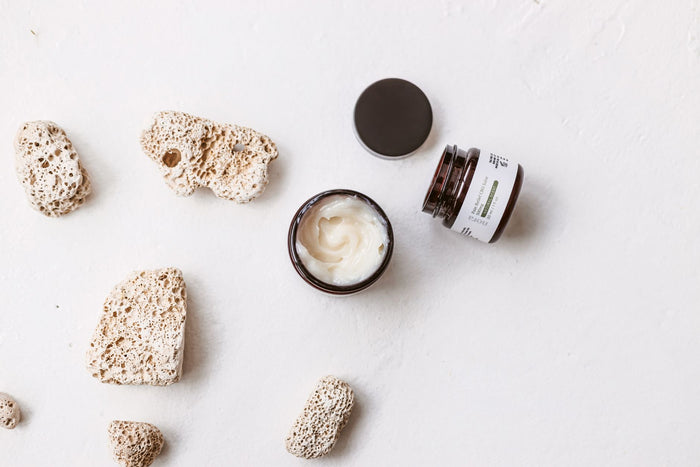
The Deep Hydration Whip from True Origin Skincare has no fragrance and no essential oils, which is the property that matters most in this location. It leaves real room for the oils, where most of the category is almost entirely tallow with rosehip, sea buckthorn, meadowfoam, castor, and squalane at working concentrations. It is a moisturizer that suits thin reactive skin. It is not a treatment for dark circles and we make no claim that it lightens them. For the wider picture see skincare for reactive, compromised skin.
Frequently Asked Questions
Does tallow help with dark circles?
Only indirectly, and only for one of the causes. Dark circles are classified as pigmented, vascular, structural, or mixed, and a moisturizer does not address pigment, vessels, or hollows. What a balm can do is improve dryness and crepey texture in thin under-eye skin, which changes how light falls and can read as slightly brighter.
Can a moisturizer get rid of genetic dark circles?
No. Where dark circles are hereditary, or caused by visible vessels under very thin skin, or by the shadow of a tear trough hollow, no topical moisturizer changes the underlying cause. A dermatologist can identify which type you have, and options such as lasers or fillers target specific types.
Can eye creams cause dark circles?
They can contribute. Post-inflammatory hyperpigmentation following allergic contact dermatitis is a documented cause of periorbital hyperpigmentation, and fragrance is the most common cause of allergic contact dermatitis. Repeated low-grade irritation on very reactive eyelid skin can leave pigment behind, so fragrance-free matters more here than almost anywhere.
What works for dark circles?
It depends on the type. Topical depigmenting agents and chemical peels are described as useful for pigment-based circles, lasers give mild to moderate benefit for vascular and pigmented types, and fillers or fat grafting are most effective where the cause is volume loss. A 2025 systematic review found multimodality approaches produce the best outcomes.
A note on scope. Skincare is personal and what works for one person may not work for another. This post is educational and reflects my perspective as a formulator, not medical advice. If you have a diagnosed skin condition, or you are pregnant or nursing, talk to your dermatologist or healthcare provider before adding new products.
Find these useful? Tell Google to show you more of them.