· By James Giles
Best Tallow Moisturizer for Sensitive Skin: What to Check Before You Buy
The best tallow moisturizer for sensitive skin is one with no essential oils, no "natural fragrance", no honey or aloe, and a short ingredient list you can read in full before you buy. Tallow itself is rarely the problem. The additions are. Rule those out on the label and the bulk of the risk in the category goes with them.
The email I get most often is some version of this: "I bought a tallow balm for my sensitive skin and it made me red and itchy, so I guess tallow is not for me." Then the person sends a photo of the jar, and the label says lavender, or frankincense, or "a proprietary blend of essential oils". The tallow was never on trial. The scent was. Sensitive skin is the one audience the category markets to hardest and formulates for worst, and that gap is the reason this guide exists.
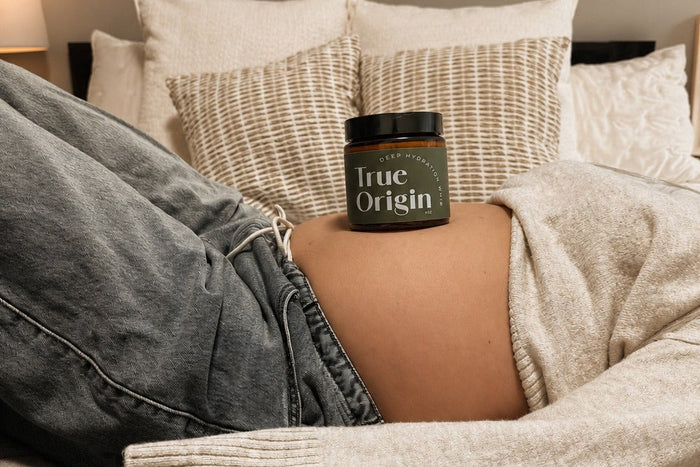
I run True Origin Skincare, and our Deep Hydration Whip was built for people who want a moisturizer that does its job with nothing in it to react to, which includes this buyer, so weigh what follows with that in mind. Every check below can be run against any brand's published list, including ours, and I say where other brands pass.
What does "sensitive skin" mean on a tallow label?
Nothing, legally. "For sensitive skin" is not a regulated phrase in the United States. The FDA's cosmetics labeling guidance counts it as a marketing claim the brand is responsible for, with no test it has to pass. A jar with twelve essential oils can carry the phrase as easily as a jar with none. The same is true of "gentle", "calming" and "for reactive skin".
So the front of the jar tells you what the brand wants you to feel. The back tells you what is inside. For sensitive skin, the back is the whole decision, and it comes down to five checks.
Why rule out essential oils before anything else?
Because they are the most common cause of a reaction to a "natural" product, and because the reaction builds rather than appears. People develop allergies to essential oils. The mechanism is oxidation: lavender, tea tree, the citrus oils and most of the others start reacting with air at manufacture, and the hydroperoxides they form are far stronger sensitizers than the fresh oil. Each application primes the immune system a little more. A jar that was fine for a year can start causing redness in year two, and once that allergy exists it does not leave.
The numbers are not small. A 2022 analysis in Contact Dermatitis of 10,930 patch-tested patients found 8.3% reacted to at least one essential oil. A 2016 study in Acta Dermato-Venereologica found that oxidized lavender oil, the "gentle" one, produced positive patch tests in 2.8% of patients, and half of those reactions were missed by the standard fragrance screening. Those are patients who already had a skin complaint, which is the group reading this page.
Essential oils hide under other names. "Natural fragrance", "parfum", "aroma" and "botanical blend" all mean undisclosed fragrance compounds, and a 2025 analysis of cosmetic labels in PMC found that products marketed as natural carried fragrance allergens at rates comparable to conventional ones. "Unscented" is also not a guarantee. It means the product does not smell of much, which can be achieved with a masking agent. Fragrance-free vs unscented explains the difference. For sensitive skin, the one acceptable version of this line on a label is a full ingredient list with no oil, blend, fragrance or aroma on it.
What else on a tallow label causes reactions?
Honey, aloe and hydrosols
Any water-containing ingredient in a tallow balm needs a preservative, and most tallow brands do not use one. Honey, aloe gel, rose water and other hydrosols all carry water. Without a preservative they can support microbial growth in the jar, and what grows in a jar is a far more common cause of a reaction than the fat it grew in. A tallow balm should be fats, waxes, oils and botanicals steeped in fat, and nothing that will spoil. The honey problem covers why honey in particular keeps appearing.
Olive oil and coconut oil as the base
These are the two cheapest ways to soften tallow, and both are a poor fit for skin that reacts. A 2013 randomized trial in Pediatric Dermatology found that four weeks of topical olive oil reduced barrier integrity and caused mild redness in adults, and the authors advised against it for anyone prone to dermatitis. Coconut oil is less of a barrier problem and more of a pore problem; it scores 4 out of 5 on the comedogenic scale from Fulton's 1984 study. If either appears as the second ingredient, it is a structural part of the formula.
Lanolin and beeswax substitutes
Lanolin is a known contact allergen, named the American Contact Dermatitis Society's Allergen of the Year in 2023, and it turns up in some tallow balms as a softener. Beeswax is well tolerated by most people and is the structural wax in most good balms, including ours. If you have a known beeswax sensitivity, which is rare, a plain single-ingredient tallow is the version to look for.
How do you read a tallow label for sensitive skin?
Ingredient lists are ordered by concentration, so the top three tell you what the jar is made of and the bottom third tells you what it is scented or preserved with. Read both ends. The table is the version of this guide you can take to a shop.
| Label line | Buy | Put it back |
|---|---|---|
| Essential oils | None listed, anywhere on the label | Any named oil, "essential oil blend", "natural fragrance", "aroma", "parfum" |
| Scent | Faint, from whole botanicals steeped in the fat, fades after absorbing | Lasts an hour or more, or "unscented" with no full list shown |
| Water-based ingredients | None | Honey, aloe, hydrosols or rose water with no preservative |
| Base oil | Castor, jojoba, squalane, meadowfoam, or tallow alone | Olive or coconut oil as the second ingredient |
| Known allergens | Not present | Lanolin, propolis, colophony, "fragrance" |
| List length | Short enough to read, every item named | "And other natural ingredients" |
| Tallow source | Suet, named farms or a named program | "Beef tallow", no source |
One addition that is not a warning sign: vitamin E and rosemary extract near the bottom of the list. Those are antioxidants protecting the oils from going rancid, and rancid oil is its own irritant. Rosemary extract is not rosemary essential oil, and the two behave differently on skin.
How do you patch test a tallow balm?
Even a label that passes every check meets a skin that has its own history. Put a small amount on the inside of the forearm or behind the ear, twice a day for three days, and watch for redness, itch or bumps. If nothing happens, move to the jawline for three more days before the face itself. Sensitization can take longer than a week to show, so a clear patch test lowers the odds rather than removing them. The two-week picture, including what a normal adjustment looks like, is in tallow for sensitive skin, which covers the rosacea and reactive-skin science this guide skips.
Which tallow balms pass the checks?
Our guide to the best tallow skincare brands sorts the category into Good, Better and Best on sourcing and formulation. For sensitive skin the filters narrow, and the sort changes.
Good: a plain single-ingredient tallow
A whipped suet tallow with nothing added clears every line in the table. There is no scent to react to, no water to spoil, no filler oil. What it lacks is any humectant, so on skin that is dry as well as reactive it seals in what is there and adds nothing, and some people find the texture heavy. For a first jar when you are not sure tallow agrees with you, it is a low-risk place to begin, and several small brands sell one for $20 to $30.
Better: an unscented version from an established brand
Most of the big names scent their main balm and sell an unscented one beside it. Toups and Co's Unscented Tallow Balm is two ingredients, tallow and organic olive oil. Primally Pure's Baby Balm leaves the essential oils out. Buffalo Gal and Vintage Tradition both offer unscented options. These are well made and widely tolerated. The one check each of them fails for sensitive skin is the base oil, which in every case is olive oil, the ingredient the 2013 trial advised against for dermatitis-prone skin. If your skin has no history with olive oil, that may not matter to you. If it does, it is the whole problem.
Best: no essential oils and no olive oil, with the oils that remain doing a job
The top tier for sensitive skin is a short list. No essential oils, no fragrance of any kind, no water-based ingredients, no olive or coconut oil, and in their place oils that earn their spot. Castor draws moisture in, meadowfoam slows water loss, squalane is something the skin already makes, and rosehip and sea buckthorn bring carotenoids. True Origin Skincare is in this tier by its own criteria, which is a conflict you should weigh, and the counterweight is that True Origin is recommended by integrative and functional doctors and carried in holistic medical clinics, where the patients are the ones every other product has failed. The whole formula is on the product page to check against the table above.
What should you expect in the first two weeks?
A tallow moisturizer that fits sensitive skin should be uneventful. No sting on application, no warmth, no itch an hour later, and after a few days a feeling that the skin is holding moisture longer between applications. Use a pea for the entire face, warmed between the fingertips and pressed into slightly damp skin. If you are using three times that, the formula is too heavy or you are over-applying, and either one shows up as congestion that gets blamed on the tallow.
If you do react, stop, and look at the label before you blame the category. In my experience the culprit is on the list under a word like lavender or fragrance far more often than it is under the word tallow. Tallow without essential oils explains why we built the formula that way, and best tallow face cream covers the texture and filler-oil side for anyone whose sensitivity shows up as breakouts rather than redness.
Frequently Asked Questions
Is tallow good for sensitive skin?
For most people, yes. Tallow's fatty acids overlap with the skin's own sebum, and plain tallow is a rare cause of reactions. The additions sold with it, essential oils above all, are what most reactions trace back to.
What is the best tallow moisturizer for sensitive skin?
One with no essential oils or fragrance of any kind, no honey or aloe, nothing with olive or coconut oil holding it together, and a full ingredient list you can read. Within that group, choose by texture and by whether the remaining oils do something.
Does "unscented" mean a tallow balm has no essential oils?
Not on its own. Unscented means it does not smell of much, which can be done with a masking agent. Read the full list and look for named oils, "natural fragrance", "aroma" or "blend".
Can tallow with lavender oil be used on sensitive skin?
Many people tolerate it, and many do not. Oxidized lavender oil is one of the stronger sensitizers in the fragrance family, and the reaction can take months of use to appear. For skin that already reacts, it is the ingredient to avoid ahead of any other.
How long should I patch test a tallow moisturizer?
Three days on the inner forearm, then three on the jawline, before using it on the whole face. A clear result lowers the risk; it does not remove it, because sensitization can take longer to show.
A note on scope. Skincare is personal and what works for one person may not work for another. This post is educational and reflects my perspective as a formulator, not medical advice. Tallow is a moisturizer; it will not cure rosacea, eczema or any other condition. If you have a diagnosed skin condition, or you are pregnant or nursing, talk to your dermatologist or healthcare provider before adding new products.
Find these useful? Tell Google to show you more of them.