· By James Giles
How to Choose a Tallow Balm: A Seven-Point Label Checklist
To choose a tallow balm, read the ingredient list and check seven things in order: the source of the tallow, whether it is suet or trim fat, the base oil beside it, whether any essential oils or fragrance appear, whether anything water-based is in the jar, whether the supporting oils do a job, and whether the texture suits where you will use it. Most balms fail on two of the seven. The ones that pass all seven are a short list, and the checklist finds them faster than any review.
I started reading tallow labels in 2023 because I had bought four jars and could not say why one worked and three did not. They all said tallow. They all said grass fed. Two said "for sensitive skin". When I lined the labels up, the differences were in the second ingredient, the last three ingredients, and the word suet, which appeared on one label and none of the others. That one was the jar that worked. Three years and a lot of labels later, the same handful of lines still decides it, so here they are in the order to check them.
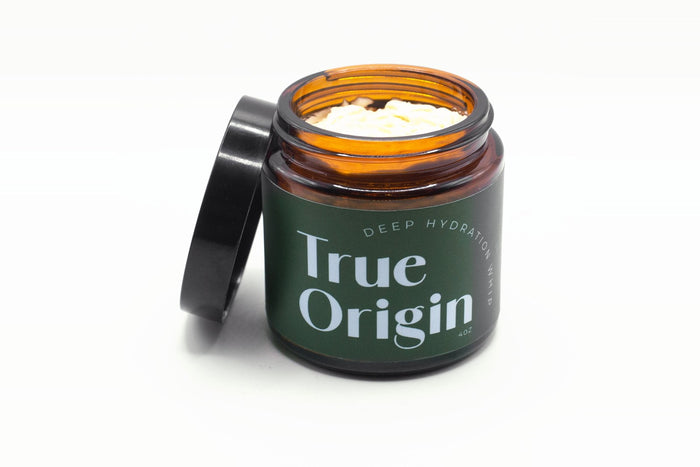
I run True Origin Skincare, and our Deep Hydration Whip is built to pass this list, so apply the same scepticism to our label that you would to anyone's. Every check works on any brand's published ingredients.
1. Where does the tallow come from?
The label should say more than "beef tallow". The useful versions name a farm, a program or a sourcing standard, and the best ones say the brand renders the fat itself. "Grass fed" is the claim most buyers look for and the one that verifies least. In 2016 the USDA withdrew its grass fed marketing standard, so the phrase on a jar now means whatever the brand decided it means. It is not a lie, and it is not a verification. Tallow sourcing transparency walks through what each sourcing claim can and cannot be checked against. The question to ask a brand is where the fat comes from and who rendered it. A brand that can answer in one sentence has passed.
2. Is it suet or trim fat?
Tallow is rendered fat, and the cut it came from changes the jar. Suet is the hard fat from around the kidneys. It renders pale, firm and close to odorless, and its fatty acid profile is the closest to human sebum of any cut. Trim fat, the fat cut from muscle, renders softer, yellower and with more of the animal's smell in it. A balm made from trim fat needs a strong scent to cover that, which is one reason so many tallow balms carry essential oils. A balm made from suet does not.
Most labels say "tallow" and stop. If a brand uses suet, it says so, because it is the harder and more expensive choice and worth claiming. If the label is silent, assume trim fat and read the scent line more carefully. Suet vs trim fat covers the chemistry.
3. What is the base oil?
Almost every tallow balm softens the tallow with a liquid oil, and the choice of oil is the single biggest difference between brands. Olive oil and coconut oil are the common ones because they are cheap. Olive oil is high in oleic acid, and a 2013 randomized trial in Pediatric Dermatology found four weeks of topical olive oil weakened the barrier and caused mild redness in adults, with the authors advising against it for anyone prone to dermatitis. Coconut oil scores 4 out of 5 on the comedogenic scale from Fulton's 1984 study, which is a face problem more than a body problem.
The oils worth seeing in that slot are the ones with a reason to be there. Castor oil draws moisture toward the skin. Jojoba behaves like sebum. Squalane is something the skin already makes. Meadowfoam seed oil slows water loss. If the second ingredient is one of those, the brand chose it for what it does. If it is olive or coconut, the brand chose it for what it costs. Tallow vs plant oils compares them one by one.
4. Are there essential oils or fragrance?
This is the check that catches more jars than any other. Essential oils are added to make tallow smell like something other than beef, and they are the most common cause of a reaction to a "natural" product. The mechanism is oxidation: the oils begin reacting with air at manufacture, and the hydroperoxides they form are far stronger sensitizers than the fresh oil. A 2022 analysis of 10,930 patch-tested patients in Contact Dermatitis found 8.3% reacted to at least one essential oil, and the allergy, once it forms, stays. Why essential oils don't belong on your skin is the full argument.
Read the bottom of the list, which is where fragrance lives. Any named oil fails the check. So do "natural fragrance", "aroma", "parfum" and "botanical blend", which are all ways of listing fragrance compounds without naming them. "Unscented" on the front is not enough on its own; it means the jar does not smell of much, which a masking agent can achieve. The passing version is a full list with no oil, blend or fragrance on it, and a scent, if there is one, that comes from whole botanicals steeped in the fat.
5. Is there anything in the jar that can spoil?
A tallow balm has no water in it, so it needs no preservative. The moment a brand adds honey, aloe, a hydrosol or rose water, that changes. All of those carry water, and in a jar with no preservative they can support microbial growth, which is a far likelier cause of a reaction than the fat. Honey appears in tallow balms often enough that we wrote the honey problem about it. The passing label has nothing water-based on it. The failing one has honey or aloe and no preservative, and the brand will usually describe that as a feature.
6. Do the supporting oils earn their place?
Here the question turns from what is wrong with a jar to what is right with it. Most tallow balms run 80 to 90% tallow, which leaves almost no room for anything else to do anything. That is sold as purity. In practice it means the balm seals moisture in and does nothing more, and a single-ingredient tallow does that job for less money. A formula that carries humectants and bioactive oils high enough on the list to matter is doing more, and it costs more to make because those oils cost more than tallow does.
Ingredient lists are ordered by concentration, so position is the tell. Rosehip oil listed last, after the vitamin E, is a label decoration. Rosehip oil listed fourth is a formulation choice. How to read skincare labels explains the ordering rules in detail; the short version is that anything below the antioxidants is present in trace amounts.
7. Does the texture suit where you will use it?
Tallow balms come as poured solids or whipped. A solid balm is dense, needs warming and scooping, and suits the body, heels and hands. A whipped balm has air beaten in, spreads thin from a small amount and suits the face. If you are buying for the face, whipped is the texture to look for, and the test is whether a pea-sized amount covers the whole face and sinks in. If you are buying for a body that is dry to the point of cracking, a solid balm's density is a feature. Whipped tallow balm covers what whipping changes and what it does not.
How do the seven checks look on a label?
The table is the whole checklist in one place. Take it to the shop, or open the brand's ingredient page beside it.
| Check | Passes | Fails |
|---|---|---|
| 1. Source | Named farms or program; brand renders its own | "Beef tallow", or "grass fed" with nothing behind it |
| 2. Cut | Suet, stated on the label | Silent, which usually means trim fat |
| 3. Base oil | Castor, jojoba, squalane, meadowfoam, or none | Olive or coconut oil as the second ingredient |
| 4. Scent | No essential oils; botanicals steeped in the fat, or nothing | Any named oil, "natural fragrance", "blend", "aroma" |
| 5. Spoilage | Nothing water-based | Honey, aloe, hydrosols, no preservative |
| 6. Supporting oils | Humectant and bioactive oils high on the list | 80 to 90% tallow with decorations at the bottom |
| 7. Texture | Whipped for the face, solid for heels and hands | A dense solid sold as a face cream |
Which checks matter most for your situation?
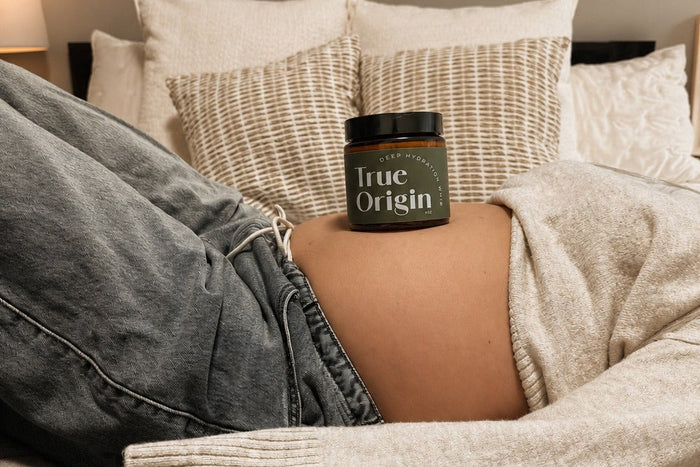
If your skin reacts to things, check 4 first and check 5 second. Nothing else on the list causes as many reactions as fragrance and spoilage. If you break out, check 3 first, because the base oil decides whether the jar congests. If you are pregnant or nursing, check 4 again, and then read best tallow balm for pregnancy for the ingredients specific to that stage. If you want the balm for cracked heels or working hands, check 7 and buy the densest thing that passes 4 and 5.
If price is the deciding factor, compare on cost per month, not per jar. At a pea a day on the face, a 4 oz jar lasts three to four months, so a $65 jar runs about $18 a month and a $25 single-ingredient balm about $7. The gap between them is the supporting oils in check 6, and whether that gap is worth paying for depends on whether you want a sealant or a moisturizer that does more than seal.
How does the category score?
Our guide to the best tallow skincare brands runs the established names through these criteria and sorts them into Good, Better and Best. The pattern is consistent: a plain single-ingredient tallow passes checks 3, 4 and 5 and fails 6; most established brands pass 1 and 6 and fail 4, because their flagship balm is scented; and the unscented versions those brands sell pass 4 and fail 3, because the base is olive oil. True Origin Skincare passes all seven by its own criteria, which is a conflict to weigh. True Origin is recommended by integrative and functional doctors and carried in holistic medical clinics, which is the outside check I would point to over anything I write here. The companion guides on choosing a tallow face cream and choosing a balm for eczema-prone skin apply the same list to those two cases.
Frequently Asked Questions
What should I look for in a tallow balm?
A named tallow source, suet rather than trim fat, a base oil chosen for what it does rather than what it costs, no essential oils or fragrance, nothing water-based without a preservative, supporting oils high enough on the list to matter, and a texture that suits where you will use it.
Is a higher tallow percentage better?
No. A balm that is 80 to 90% tallow seals moisture in and does little else, which a single-ingredient tallow does for less. Room for humectants and bioactive oils is what separates a moisturizer from a sealant.
Does "grass fed" on a tallow label mean anything?
Less than it used to. The USDA withdrew its grass fed marketing standard in 2016, so the phrase is self-defined by each brand. A named farm, program or in-house rendering is a stronger signal than the words grass fed alone.
Why do so many tallow balms contain essential oils?
To cover the smell of tallow rendered from trim fat, and because fragrance sells. Suet renders close to odorless and does not need covering, so a suet balm can be scented with whole botanicals or left plain.
Should I buy a whipped or a solid tallow balm?
Whipped for the face, where spreading thin from a pea matters. Solid for heels, hands and very dry body skin, where density is the point.
A note on scope. Skincare is personal and what works for one person may not work for another. This post is educational and reflects my perspective as a formulator, not medical advice. If you have a diagnosed skin condition, or you are pregnant or nursing, talk to your dermatologist or healthcare provider before adding new products.
Find these useful? Tell Google to show you more of them.