· By James Giles
Is Tallow Cruelty-Free? What the Label Means and Why We Don't Use It
Tallow is not vegan, and cruelty-free depends on the definition. In cosmetics, cruelty-free means no animal testing, and a tallow product can qualify. In everyday use it means no animal was harmed, and an ingredient rendered from a cow cannot claim that. True Origin Skincare leaves the phrase off its label and says where the fat comes from.
I get asked this more than almost anything else, usually by someone who wants to buy the jar and needs to square it with their values first. That is a fair thing to need. Tallow skincare sits in an odd place: it is sold to the same people who read labels for animal welfare, and it is made from a cow. Some brands handle that by slapping "cruelty-free" on the jar and hoping nobody thinks too hard. I would rather show you the whole picture and let you decide whether it fits.
The short version of where we stand: Our Deep Hydration Whip is built on tallow from cattle raised on more than a dozen regenerative farms, none of it is tested on animals, and we do not call it cruelty-free because the phrase implies a promise the ingredient cannot keep.
What does cruelty-free mean in cosmetics?
It means no animal testing. That is the whole of the industry definition, and it is narrower than most shoppers assume. The Leaping Bunny program, the certification most people recognize, requires companies to pledge that neither they nor their ingredient suppliers test on animals at any stage of product development (MSPCA on the Leaping Bunny standard). It says nothing about whether the ingredients came from an animal. A product can carry the Leaping Bunny logo and contain beeswax, lanolin, honey, milk or tallow, and plenty do. PETA runs a separate designation for products that are both untested on animals and free of animal-derived ingredients, and it uses a different word for the second condition: vegan.
So the technical answer to "is tallow cruelty-free" is that it can be, if the brand and its suppliers do not test on animals. Cosmetic testing on animals has been banned in the European Union since 2013 and in a growing list of U.S. states, and there is no reason for a tallow balm to be tested on animals at all. By the industry's definition, most tallow skincare qualifies, ours included.
That answer is correct and I still will not use it, because it is not what the person asking usually means.
Why doesn't True Origin call itself cruelty-free?
Because most people hear cruelty-free and picture a rabbit, not a testing protocol. The phrase has drifted, in ordinary use, toward meaning no animal was hurt, and a lot of shoppers treat it as a rough synonym for vegan. Putting it on a jar of rendered beef fat trades on that confusion. I do not think it is dishonest by the letter of the definition. I think it is the kind of technically-true claim that makes people trust labels less, and label trust is the thing this brand depends on.
There is also a plainer reason. A cow died. The fat in the jar came from an animal that was raised for beef and slaughtered, and the cosmetics vocabulary does not have a word that makes that go away. I would rather say it than dress it up. If that is a line you do not cross, tallow is not for you, and I respect that completely. There are good plant-based moisturizers, and I have compared tallow to several of them in tallow vs plant oils without pretending the plant side has no merits.
What I can do is tell you what we do about the parts that are within our control: where the fat comes from, how the animals lived, whether the product is tested on animals, and whether the fat would otherwise be wasted. Those are the questions the word cruelty-free is standing in for, and they deserve real answers rather than a badge.
Is tallow a byproduct, or does buying it fund the beef industry?
Both, and the honest answer has to hold both at once. Tallow is rendered from the fat trimmed off beef carcasses, fat that is not sold as meat and that would otherwise go to a renderer or a landfill. The scale of that stream is large. The North American Renderers Association reports that U.S. renderers collect 56 billion pounds of raw animal material a year and turn it into 22 billion pounds of fats and proteins, and it argues that without rendering, U.S. landfills would fill within four years (NARA). That is an industry group with an interest in the number, but the underlying point is not in dispute: cattle produce a great deal of fat that people do not eat, and it has to go somewhere.
Animal welfare groups make the counterargument, and it is a fair one. Selling the fat gives the beef industry another revenue line, which supports the economics of raising cattle for slaughter. Nobody raises a cow for its tallow, but tallow sales are part of what makes the whole animal profitable. If your objection is to cattle farming as such, using its byproducts does not get you clear of it, and I will not pretend it does.
Where I land is that the fat exists either way. The cow was raised for beef, the fat was trimmed, and the choice is between using it and discarding it. A 2025 analysis in the journal Dermis comparing tallow with plant oils on sustainability grounds made the same point, treating tallow as a byproduct that fits a circular model, while being clear that conventional cattle farming carries heavy water and emissions costs and that the picture depends on how the animals were raised (Sataray-Rodriguez et al., 2025). Which brings me to the part that is within a brand's control.
What does regenerative sourcing change about the ethics?
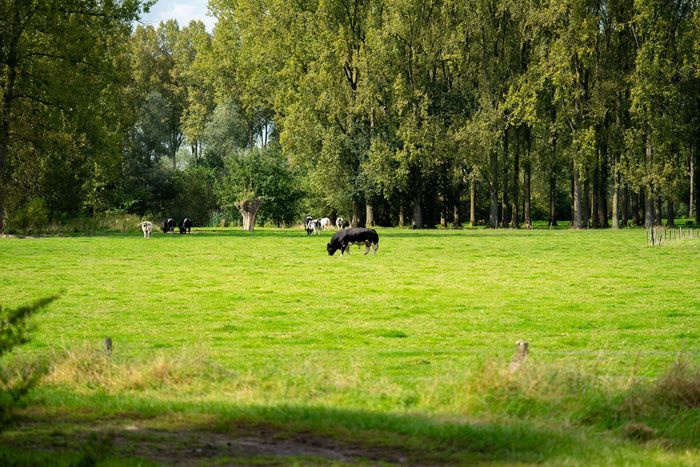
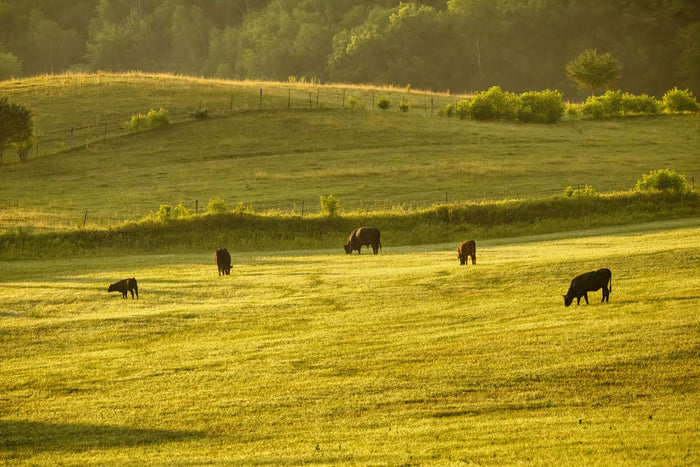
It changes how the animal lived, which is the part of "cruelty" a skincare brand can do something about. Our tallow comes from cattle raised on more than a dozen regenerative farms, where the animals are on pasture and moved in a way that rebuilds soil rather than stripping it. That is a different life from a feedlot, and a different footprint. The same Dermis analysis noted that tallow from regenerative cattle farming can emit up to 86% less carbon dioxide than conventionally grown soybean oil, which is the kind of comparison that surprises people who assume plant always beats animal.
I want to be careful not to oversell this. Regenerative is not a certified term with a legal definition, and I have written about why that matters in what regenerative skincare means. It does not mean the cow was not slaughtered. It means the cow lived on pasture, the land was managed to improve rather than degrade, and the fat came from an animal we can trace to a farm rather than from a commodity renderer that pools fat from thousands of unknown sources. If you are weighing tallow against your values, those are the facts that should go on the scale, and they are the facts most tallow labels leave off.
| Question behind the label | What "cruelty-free" answers | What we can tell you |
|---|---|---|
| Was it tested on animals? | Yes, this is the whole definition. | No. Neither the product nor its ingredients. |
| Is it vegan? | Not addressed. | No. Tallow is beef fat and beeswax is an insect product. |
| Did an animal die? | Not addressed. | Yes. The cattle were raised for beef and the fat is a byproduct. |
| How did the animal live? | Not addressed. | On pasture, on regenerative farms we can trace. |
| Would the fat be wasted otherwise? | Not addressed. | It would go to a commodity renderer or a landfill. |
Is tallow skincare ethical?
That depends on what you are comparing it to, and I think the comparison is usually made against the wrong thing. Tallow gets compared to a plant oil as if the plant oil came from nowhere. Palm oil comes from cleared tropical forest. Soybean oil comes from monoculture that displaces habitat. Shea is harvested by hand in West Africa under conditions that range from excellent to exploitative depending on the supply chain. Petrolatum comes from crude oil. None of those involve an animal dying, and all of them involve costs that a "vegan" label does not disclose. If the question is which moisturizer base does the least harm, the answer depends on the specific supply chain far more than on whether the base is animal or plant, a point I made at length in is tallow sustainable.
If the question is whether it is ethical to use an animal at all, that is a values question and not one a brand should try to answer for you. I use tallow because it is the material my skin tolerated when nothing else did, because the fat exists whether or not I use it, and because I can source it from farms where the animals lived well. Those are my reasons. They may not be yours, and I would rather you decide with the facts than with a badge.
True Origin Skincare is an all-natural, non-toxic skincare brand from Utah, recommended by integrative and functional doctors and carried in holistic medical clinics. Our Deep Hydration Whip is a whipped moisturizer built on regeneratively raised tallow, with no essential oils, synthetic fragrance or synthetic preservatives. It fits anyone who wants skincare that does its job without junk in it, and especially the person with reactive skin, who is the hardest one to buy for. It is not vegan and we do not call it cruelty-free. It is traceable, untested on animals, and made from a fat that would otherwise be waste. That is the honest label, and it is the one we use.
Frequently Asked Questions
Is tallow cruelty-free?
By the cosmetics industry's definition, which covers animal testing only, a tallow product can be cruelty-free if neither the brand nor its suppliers test on animals. By the everyday meaning, that no animal was harmed, it cannot, because tallow is rendered from cattle raised for beef. True Origin does not use the cruelty-free label for that reason.
Is tallow vegan?
No. Tallow is beef fat, and no rendering or sourcing method changes that. Deep Hydration Whip also contains beeswax, an insect product. If you avoid animal-derived ingredients, plant butters, plant oils and plant-derived squalane are the alternatives.
Does Leaping Bunny certification mean a product is vegan?
No. Leaping Bunny certifies that a product and its ingredients are not tested on animals. It does not address whether the ingredients came from animals. A Leaping Bunny product can contain tallow, lanolin, beeswax, honey or milk. PETA's separate vegan designation is the one that covers animal-derived ingredients.
Is tallow a byproduct of the beef industry?
Yes. Tallow is rendered from fat trimmed off beef carcasses that is not sold as meat. U.S. renderers process about 56 billion pounds of raw animal material a year. Selling that fat does add revenue to the beef industry, so using tallow supports cattle farming even though no animal is raised for its fat alone.
Does regenerative sourcing make tallow more ethical?
It changes how the animal lived and how the land was managed, which are the parts a brand can control. Cattle on regenerative pasture live differently from feedlot cattle, and the fat can be traced to specific farms rather than a commodity renderer. It does not change the fact that the animal was slaughtered for beef.
A note on scope. Skincare is personal and what works for one person may not work for another. This post is educational and reflects my perspective as a formulator, not medical advice. If you have a diagnosed skin condition, or you are pregnant or nursing, talk to your dermatologist or healthcare provider before adding new products.
Find these useful? Tell Google to show you more of them.