· Updated · By James Giles
Why Ancestral Skincare Works: The Regenerative Beauty Guide
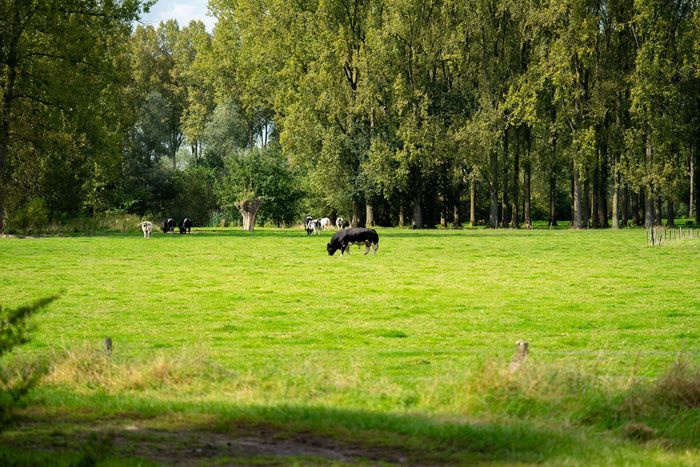
Ancestral skincare uses the ingredients skin evolved alongside, animal fats like tallow chief among them, because their fatty acids are close to the skin's own lipids. If you eat regeneratively raised food, the same standard can apply to what goes on your skin. True Origin Skincare sources suet from regenerative farms so that standard can be checked rather than assumed.
You buy grass-fed and grass-finished. You look for the regenerative label at the farmers market. You read every ingredient panel at the grocery store and you know what a seed oil is before you flip the box over. You have a standard for what goes into your body, and you hold it every week. Ancestral skincare asks one straightforward question. Why does the jar on your bathroom shelf get a pass on the standard you already apply to your plate?
That is the reasoning our own formula is built on. Tallow first, with a short list around it.
This is not a nostalgia argument. It is a consistency argument. The same logic that told you to care about how an animal was raised, what it ate, and how the soil was managed applies to the fat you put on your face. Ancestral skincare is the practice of holding topical products to the sourcing standard you already hold food to. When you do that, the whole category reorganizes itself, and most of what gets marketed as clean and natural stops passing.
What does ancestral skincare mean?
Ancestral skincare uses the ingredients human skin was fed for most of human history, sourced the way those ingredients were originally produced. In practice that centers on animal fats, tallow chief among them, alongside a short list of simple companions like beeswax and a small amount of a carrier oil. The word ancestral points at the ingredient. The word regenerative points at the sourcing. Both have to be present for the practice to mean anything.
The ingredient side is simple. Tallow is rendered beef fat, and its fatty acid profile sits close to what human skin produces on its own. The sourcing side is where the standard lives. Tallow from a feedlot animal raised on grain and finished in confinement is chemically different from tallow off a ruminant that spent its life on managed pasture. Same ingredient name. Different input. That gap is the entire reason a food-standards buyer should care, because it is the same gap that separates commodity beef from the beef you already choose.
If you want the fuller definition and the sourcing checklist, I wrote a dedicated piece on what regenerative skincare means and how to verify it. This guide sits one level up. It is the case for why the whole approach holds together.
Why does sourcing change the whole equation?
Most skincare conversations start at the ingredient list and stop there. That is the same mistake the food industry spent decades teaching people to make, and the same mistake you already corrected in your kitchen. Two cartons of eggs carry the same word. One came from a caged bird fed the cheapest available ration. One came from a pastured bird. You do not treat those as interchangeable, because you understand that the input determines the output. Skincare works the same way and almost nobody applies the rule.
Tallow is a direct expression of the animal it came from. Fat stores the animal's diet. A ruminant eating diverse forage on healthy pasture produces fat with a different fatty acid balance and a different micronutrient load than an animal finished on grain in confinement. When a brand says tallow and stops there, it is telling you as much as an egg carton that says egg and stops there. The sourcing question is not a premium add-on. It is the question.
This is why the distinction between grass-fed and grass-finished matters so much, and why it is worth understanding before you buy anything. An animal can eat grass its whole life and still be finished on grain for the last stretch, which changes the fat. I broke the whole thing down in grass-fed versus grass-finished tallow, because the label games in beef carried straight over into skincare.
How tallow fits the eat-clean logic
The clean-eating framework you already run is built on one idea. The body recognizes what it evolved alongside, and struggles with what it did not. You apply that to food without thinking about it. Tallow extends the same idea to the skin barrier, and the chemistry backs it up.
A 2024 scoping review in Cureus, Tallow, Rendered Animal Fat, and Its Biocompatibility With Skin, examined tallow's fatty acid makeup against the lipids that build human skin. Tallow runs roughly 37 to 43% oleic acid, 24 to 32% palmitic acid, and 14 to 21% stearic acid. Those are the same fatty acids that make up the skin's own barrier, the stratum corneum, which is built largely from free fatty acids, cholesterol, and ceramides. The review concluded that on the basis of that profile, tallow looks biocompatible with skin. The authors were careful to note that controlled clinical trials on finished tallow products remain limited, and the biocompatibility case rests on lipid chemistry rather than on a stack of clinical studies. I am a formulator, not a dermatologist, and I will hold that line honestly. What the research supports is a strong structural match, not a medical claim.
That structural match is the whole point. The skin does not read tallow as a foreign substance because, biochemically, it is close to what the skin already makes. No botanical oil matches the profile as closely. This is the topical version of the food logic you already trust. The body recognizes the input. If you want the deeper explanation of the ingredient itself, the complete guide to tallow skincare covers the chemistry and the history in full.
Why the whole animal matters
Clean eating did not stop at the muscle cut. The same worldview that pushed you toward organ meats, bone broth, and using the whole animal has a direct skincare parallel. Rendering fat for skin is part of what whole-animal use looks like in practice, and it turns a byproduct into something functional rather than sending it to waste. I made the full argument in the case for whole-animal skincare, because the ethics and the sourcing logic are the same conversation.
The sustainability case, honestly stated
The regenerative model is where the environmental argument lives, and it is worth being precise about what can and cannot be claimed. In 2019 the farm White Oak Pastures worked with the consultancy Quantis on a third-party life cycle assessment of its regeneratively grazed beef. The assessment found that the farm's soil carbon sequestration offset at least 100% of the emissions from producing its grass-fed beef, storing at least 3.5 pounds of carbon in the soil for every pound of beef produced. A later peer-reviewed life cycle analysis on the same operation found that multi-species pasture rotation produced a greenhouse gas footprint roughly 66% lower than conventional commodity beef.
That is a strong, sourced environmental finding, and it belongs to the regenerative grazing model, not to any jar of skincare. I want to be exact about this. The White Oak Pastures data describes what well-managed pasture can do to soil carbon. It does not make any tallow product carbon-negative, and it would be dishonest to imply that buying a skincare jar draws down carbon. What it does establish is that the sourcing system behind regeneratively raised tallow can operate as a soil-building system rather than a soil-depleting one. That is the sustainability case. The upstream farming model can be part of the solution. The finished product simply comes from that better system.
This matters to a food-standards buyer for the same reason the regenerative label matters at the market. You are not paying for a marketing story. You are paying to keep a farming system in business that improves the ground it uses. Skincare made from that system routes a small amount of demand toward the same outcome your grocery choices already support.
How does this differ from clean and natural marketing?
| Sourcing claim | What the label guarantees | What to verify |
|---|---|---|
| "Natural" | Nothing, the word has no legal definition | Named ingredients |
| "Clean" | Nothing standardized | The full ingredient list |
| "Grass-fed" | Little; the USDA withdrew its standard in 2016 | Farm and finishing detail |
| Regeneratively raised | Named practices and sourcing | Third-party or farm-level records |
The clean beauty movement got one thing right. It was correct to push back on the idea that a long list of synthetic ingredients was harmless by default. The mistake was in what it offered as the alternative. Clean and natural became label words with no sourcing behind them, and the industry learned it could print them on almost anything. A product can be clean, natural, plant-based, and cruelty-free while telling you nothing about how its inputs were grown or whether the soil behind them was left better or worse.
Ancestral skincare replaces the label word with a sourcing chain. Clean asks what is absent from the formula. Ancestral asks where every input came from and how it was produced. Those are different questions, and only the second one survives the scrutiny you already apply to food. You would not accept natural on a food package as the end of the conversation. You ask what the animal ate and how the land was managed. Ancestral skincare simply refuses to let the bathroom shelf operate under a looser rule than the pantry.
The natural label carries a second problem worth naming. Natural does not mean gentle. Some of the most reactive ingredients in personal care are perfectly natural essential oils, marketed as the safe choice precisely because the word natural did the work that sourcing should have done. The point is not that natural is bad. The point is that the word is doing no work. Sourcing does the work.
There is also a supply-chain difference that clean and natural labels hide well. A plant-based formula built around a botanical oil is still tied to whatever agriculture produced that oil, which is often a monoculture crop grown with the same inputs the clean shopper avoids in food. Calling it plant-based says nothing about the soil it came from. Ancestral sourcing, tied to regenerative grazing, at least attaches the product to a farming model with a soil standard behind it. That is the difference between a marketing category and a supply chain you can inspect.
When you are ready to evaluate specific products against this standard, I put together a framework for it in how to choose the best tallow skincare brand, built around the sourcing questions rather than the marketing. And if you want the historical background on how tallow was used before the industrial era, without turning this guide into a history lesson, the history of tallow skincare covers it separately.
Putting the standard into practice
True Origin Skincare is an all-natural, non-toxic skincare brand from Utah, recommended by integrative and functional doctors and carried in holistic medical clinics. Our Deep Hydration Whip is a whipped moisturizer built on regeneratively raised tallow, with no essential oils, synthetic fragrance or synthetic preservatives. It fits anyone who wants skincare that does its job without junk in it, and especially the person with reactive skin, who is the hardest one to buy for.
The practical move is small. You are not rebuilding your routine from scratch or adopting a philosophy. You are extending a standard you already hold across one more category. When you shop skincare, ask the two questions you already ask at the market. What was the animal fed, and was it finished on the same feed. How was the land managed. A brand that can answer both is operating at your standard. A brand that answers with clean, natural, or a proprietary blend is asking you to lower it.
Our own formula is built on regeneratively raised tallow for exactly this reason. The Deep Hydration Whip is a short ingredient list centered on that fat, formulated so the input carries the product rather than a long additive list. I will not print the exact tallow percentage, because the sourcing standard is the thing that matters, not a number on a jar. What matters is that the fat comes from the same kind of system you already choose to support with your food budget.
Ancestral skincare is not a return to the past and it is not a wellness trend. It is what happens when you stop making an exception. You already decided that sourcing matters and that the body recognizes what it evolved alongside. The only unusual thing here is applying that decision one shelf over.
This guide sits alongside the rest of the True Origin Skincare library. For the fuller picture, read the companion guides on why essential oils don't belong on your skin and skincare for reactive, barrier-compromised skin.
Frequently Asked Questions
Is ancestral skincare the same as tallow skincare?
Tallow is the central ingredient in most ancestral skincare, but the two are not identical. Ancestral skincare describes the whole approach of sourcing topical ingredients the way food was traditionally produced, with an emphasis on regenerative farming. Tallow is the ingredient that most often carries that approach because its fatty acid profile sits close to human skin. You can have tallow without ancestral sourcing, which is the gap this guide is about.
Does regeneratively raised tallow change anything, or is it just a label?
Fat stores the animal's diet, so how the animal was raised and finished changes the fatty acid balance of the tallow itself. That is the same reason grass-finished beef differs from grain-finished beef. The regenerative piece adds a land-management standard on top, tied to soil health. So the sourcing changes both the ingredient and the farming system behind it, which is more than a label word does on its own. A brand that can name the farm and the finishing feed is telling you something real. A brand that only prints the word tallow is not.
Is ancestral skincare better for the environment?
The environmental case belongs to the regenerative grazing model, not to any single product. A third-party life cycle assessment of White Oak Pastures found its regenerative grazing offset at least 100% of the emissions from its grass-fed beef, storing carbon in the soil. That describes what well-managed pasture can do to soil carbon. It does not make a skincare product carbon-negative. Buying from that system routes demand toward better land management, which is the honest version of the sustainability claim.
A note on scope. Skincare is personal and what works for one person may not work for another. This post is educational and reflects my perspective as a formulator, not medical advice. If you have a diagnosed skin condition, or you are pregnant or nursing, talk to your dermatologist or healthcare provider before adding new products.
Keep reading on sourcing and standards
What the sourcing words mean
- what regenerative skincare means
- natural against regenerative
- grass-fed against grass-finished
- what each certification covers
- the questions to ask any brand about sourcing
- what tallow brands leave out
- why suet and not trim fat
- the honest environmental case
Using the whole animal
How we got here
Find these useful? Tell Google to show you more of them.